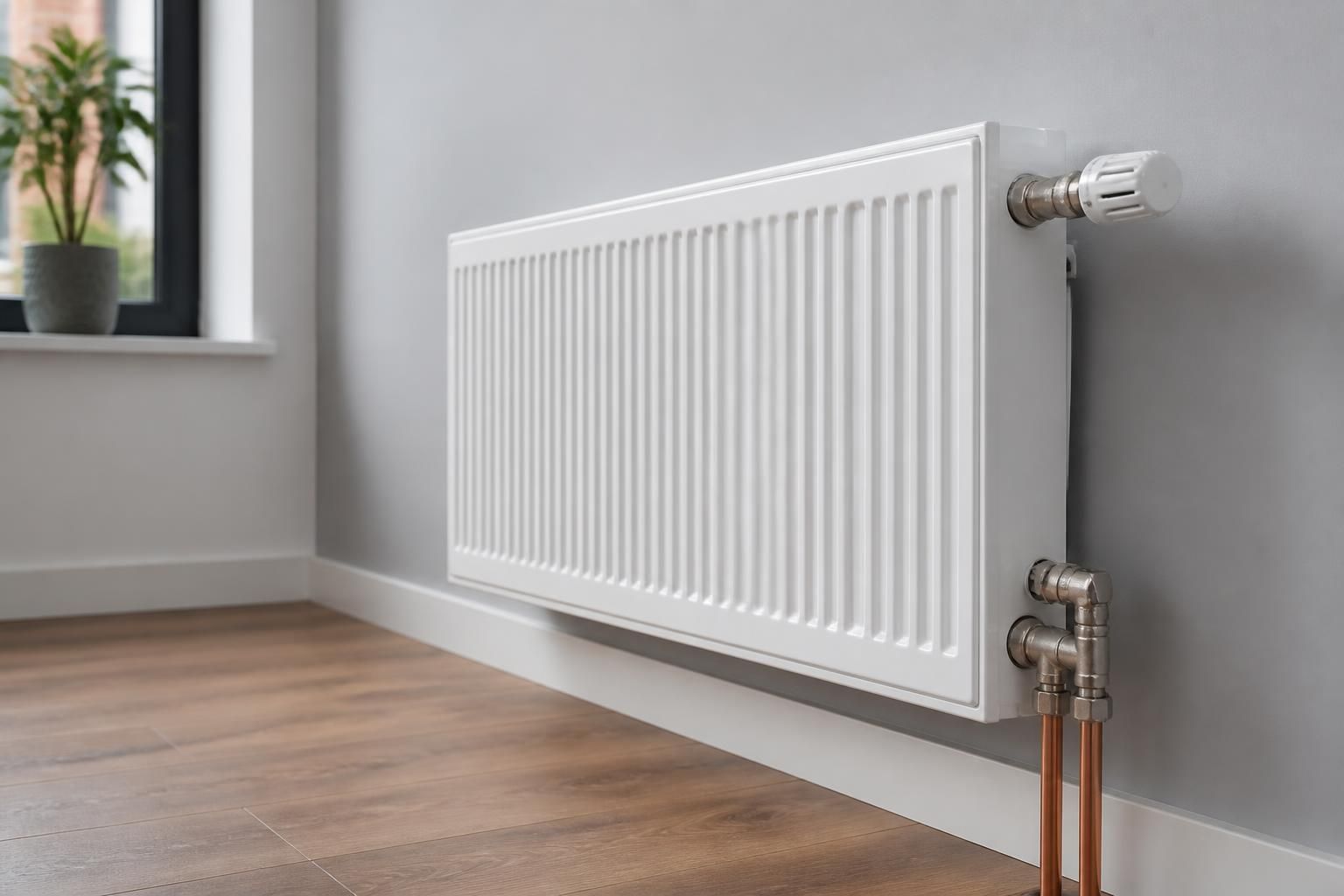
Cold spots on radiators, noisy pipework, and heating that takes longer to warm the house are all signs the system may be packed with sludge and debris. If rooms are heating unevenly or the boiler seems to be working harder than it should, a power flush can make a noticeable difference.
Glow Plumbing & Heating Ltd. carries out power flushing for homes and properties at Milton Keynes MK17 9AA, UK, helping clear built-up magnetite, rust, and loose deposits from central heating systems. We use a controlled flushing process to improve circulation, support heat transfer, and reduce strain on the parts that move hot water around the property.
A central heating system does not usually stop working because of one single fault. More often, performance slips slowly as sludge collects inside radiators, pipework, valves, and the boiler circuit. The result can be a system that still runs, but never seems to deliver the heat you expect.
Power flushing is often worth arranging when you notice one or more of these warning signs:
These symptoms usually mean water is not moving through the heating circuit as it should. A flush helps clear the internal build-up that restricts circulation and leaves heat uneven across the property.
Power flushing is more thorough than simply draining and refilling the system. We connect specialist flushing equipment to the heating circuit and push treated water through the system at controlled flow rates to lift and remove loosened deposits.
Inside a neglected heating system, you can find a mix of debris that affects output and circulation:
Deposits often collect in radiators with poor circulation, low points in the pipework, and areas where water speed drops. Once that material starts to harden, a basic drain-down will not always dislodge it. A power flush is designed to keep that material moving until it can be removed from the system.
Every system behaves a little differently, so the process starts with checking how the heating circuit responds, where the cold spots are, and whether any components need particular care during the flush. From there, we connect the flushing setup and work methodically through the system.
We assess the heating layout, radiator condition, and current symptoms so the flush can be directed where the build-up is likely to be worst.
Flushing water is circulated through the circuit to break up loose debris and carry it out of the system without causing unnecessary disturbance to sound components.
Each radiator is worked through so deposits trapped inside individual units have a chance to move out rather than remain behind.
After the debris has been removed, the system is refilled and checked so heat can travel more evenly around the property.
Glow Plumbing & Heating Ltd. handles the process with care because a rushed flush can miss the real source of the restriction. The point is not just to move water through the pipes, but to clear the parts of the circuit that have been holding back performance.
A successful power flush does not change the design of the system, but it can improve how the system behaves day to day. Many homeowners notice the difference when radiators begin heating more evenly and rooms no longer take so long to warm.
After a flush, you may notice:
If a system has been struggling for a long time, the improvement may be gradual rather than dramatic. Even so, removing sludge and debris gives the heating circuit a far better chance of working as intended.
Sometimes a flush is the right starting point, but it also helps reveal where a separate fault may be hiding. If circulation remains poor after the debris has been removed, there may be another issue affecting the heating circuit.
During and after the flush, we pay attention to signs that point beyond sludge build-up:
Where needed, we can also advise on boiler repairs, heating repairs, radiator installations, and central heating upgrades. That way, the flush is not treated as a guess, but as part of a sensible approach to getting the full system back under control.
Power flushing suits a range of heating systems, from domestic homes to properties with larger heating circuits. The approach is especially useful when radiators show mixed symptoms across different rooms, or when the boiler and heating controls are working but the heat is not reaching the rest of the system evenly.
At Milton Keynes MK17 9AA, UK, we carry out power flushing for homeowners who want a practical fix for poor circulation and for property owners who need the heating circuit cleared before further work is carried out. If your system has been repaired, upgraded, or left with years of internal debris, a flush can help prepare it for better performance.
When sludge builds up inside a heating circuit, the system has to push water through narrower passages. That extra restriction can lead to uneven temperatures, extra noise, and more wear on the components that are trying to move the water around the property.
By clearing the accumulated debris, power flushing gives the heating system a cleaner route through radiators and pipework. That can help the boiler’s heat reach the rooms more evenly and reduce the stop-start frustration that comes with a clogged circuit.
Glow Plumbing & Heating Ltd. is based at Bow Brickhill, Unit 20, Galley Lane Farm Galley Lane, Milton Keynes MK17 9AA, UK, and serves Milton Keynes plus surrounding areas. We work with customers across Milton Keynes, Bletchley, Newport Pagnell, Woburn Sands, Cranfield, Towcester, Leighton Buzzard, Buckingham, and Dunstable.
If you are unsure whether your property is a good fit for power flushing, contact us and we can talk through the symptoms and next steps before any work is arranged.
A power flush removes sludge, rust, magnetite, loose scale, and other debris that collect inside the heating circuit and restrict water movement.
Cold spots, slow heat-up times, noisy pipework, and dirty water from radiator bleeding are common clues that the system may need flushing.
Not usually. Many radiators improve after flushing alone, although a badly damaged or badly blocked radiator may still need further attention.
Yes, especially where the noise comes from trapped debris, restricted circulation, or pockets of sludge moving through the system.
It depends on the size and condition of the heating system, along with how heavily blocked it is and how many radiators need attention.
Once the system has been flushed and refilled, keep an eye on heat distribution and report any remaining cold spots or unusual sounds so they can be checked.

Get in Touch
Tell us what is happening, whether it is a repair, installation, or ongoing maintenance need. We will help you arrange the right next step for your property or business.